
by Benedict Soghie | Apr 12, 2019 | Christian Religion, Faith
Jesus said “As Jonah was three days and three nights in the belly of a huge fish, so the Son of Man will be three days and three nights in the heart of the earth.” Matthew 12:40. Jesus was three days and two nights in a tomb, in the heart of the earth, in a dark place. The third night had to have been the night before, to make it three in a row because after He rose there would be no more night for Him. Jesus was in a dark place from the time Judas went out from the place where Jesus and His disciples were eating supper to the time of His rising from death making it three nights and three days. Thursday night, the night of the last supper, Friday He was crucified and died and placed in a tomb and Friday night, Saturday and Saturday night still in the tomb, and very early Sunday morning still in the tomb.
During His last meal with His disciples, Jesus dipped a piece of bread giving it to Judas Iscariot.” As soon as Judas had taken the bread, he went out. And it was night.” John 13:30. ‘It was night’ is loaded with meaning. It was the beginning of the end for Jesus, and the first of three nights and three days of darkness.
Even before Judas returned with the armed crowd to arrest Jesus, He began going through extreme stress. “Being in agony, He prayed more earnestly. Then His sweat became like great drops of blood falling down to the ground.” Luke 22:44. Hematohidrosis is when blood vessels dilate and burst moving into sweat glands. It can happen when a person is going through great stress or just after. Then the person sweats blood. Jesus was under huge duress if He was sweating great drops of blood. Tremendous pain.
After His arrest “Jesus said to the chief priests and officers of the temple guard, “This is your hour – when darkness reigns.” Luke 22:53. God appointed these dark times for Jesus.
He spent one night, Thursday night under arrest before Caiaphas, the elders and the scribes. The next day He was tried and died and then He spent two nights in a tomb.
Jesus met with a lot of unjust harm. He was picked up by an armed mob, Caiphas tried bringing some charge against HIm, along with the scribes and elders. He was sent to Herod to be examined, and then to Pilate who finally gave the order to execute Him because He wanted to please a bloodthirsty crowd. People were hitting Jesus with the palms of their hands, mocking Him, and whipping Him. To cap it all they crucified Him leaving Him to die a slow death on a cross in public place where many people could see Him. He did it all for us so that we might live.

by Benedict Soghie | Apr 12, 2019 | Christian Religion, Faith
In Galatians 6:15-16 the apostle Paul writes to the churches in Galatia:
“15 For neither is circumcision anything, nor is uncircumcision, but what counts is a new creation. 16 And those who will walk by this rule, may peace and mercy be upon them, that is, upon the Israel of God.”
My translation here depends on matters to be discussed below, as I will explain in due course.
There is a big debate about what Paul means by “the Israel of God” in v. 16. Some Christians say that it refers to the church. Others say that it refers to ethnic Israel as a whole. And another group says that it refers to all Jewish Christians.
In this article, I will try to determine which of these interpretations is correct. And then I will say something about why this is important.
PRELIMINARY POINTS
Before getting into the main part of the discussion, there are two preliminary points that I need to make about this passage.
The identity of “those who will walk by this rule”
Firstly, we need to consider who “those who will walk by this rule” in v. 16 refers to.
“This rule” is very probably the whole principle of v. 15: “neither is circumcision anything, nor is uncircumcision, but what counts is a new creation.” Much less probably, “this rule” refers specifically to the new creation.
Regardless of which of these options is correct, however, Paul clearly understands “those who will walk by this rule” as Christians who are doing the will of God.
Simplifying a little, then, but not in a misleading way, we can say that “those who will walk by this rule” refers to the church. There is wide agreement about this.
The Greek word kai
Secondly, I need to say a few words about the Greek text in the second half of v. 16.
I have translated v. 16 in this way:
“And those who will walk by this rule, may peace and mercy be upon them, that is [kai], upon the Israel of God.”
The Greek word that underlies my translation of “that is” is kai. In this translation, kai is being used in what is known as an explicative or epexegetic sense. This means that what comes after the kai gives more information about what is referred to before the kai.
The explicative use of kai is fairly uncommon in the New Testament, but it does occur (e.g., in Mark 1:19; 1 Corinthians 15:24; Colossians 1:2). For the reasons that I will give below, I have chosen to understand kai as explicative in Galatians 6:16.
However, this is not the only potential way that kai could be translated. This word more commonly means “and,” and we could potentially translate v. 16 in this way:
“And those who will walk by this rule, may peace and mercy be upon them, and [kai] upon the Israel of God.”
If kai is explicative, meaning “that is,” then “those who will walk by this rule” are the same group of people as “the Israel of God.”
But if kai means “and,” there are two potential options:
Either (i) “those who will walk by this rule” is a separate group of people from “the Israel of God,” or (ii) Paul narrows his focus as he moves from “those who will walk by this rule” to “the Israel of God,” he uses “and” loosely, and he understands “the Israel of God” to be part of “those who will walk by this rule.”
Actually, it gets even more complicated than this, because I think the translators of some English versions of the Bible that translate kai as “and” did actually understand “those who will walk by this rule” and “the Israel of God” to be the same group.
Anyway, I don’t want to get into a long discussion of exactly how to translate and the meanings of Greek and English words here. The key point I am making is that it is potentially possible to understand the Greek of v. 16 in any one of three ways:
(a) “those who will walk by this rule” is the same group as “the Israel of God.” If so, then, because “those who will walk by this rule” is the church, as we saw in the first preliminary point, “the Israel of God” would be the church.
(b) “those who will walk by this rule” and “the Israel of God” are separate groups. If so, then “the Israel of God” would be ethnic Israel. It is true that some ethnic Jews in Paul’s day were Christians (as is also true today), so some people would have fallen into both categories. But Paul could loosely be referring to the church and ethnic Israel as separate groups of people.
(c) “the Israel of God” is part of “those who will walk by this rule.” If so, “the Israel of God” would be all Jewish Christians.
The Greek will allow any one of these three options, although some have more natural Greek than others as we will see below.
INTERPRETING “THE ISRAEL OF GOD”
We are now ready to begin trying to determine what “the Israel of God” in Galatians 6:16 refers to.
As we have seen, there are three options:
(1) It refers to the church.
(2) It refers to ethnic Israel as a whole.
(3) It refers to all Jewish Christians.
Which, then, is the correct interpretation?
It does not refer to all Jewish Christians
To begin with, we should reject the view that “the Israel of God” refers to all Jewish Christians, i.e., option (3):
First, there is the minor point that this would involve using kai, meaning “and,” in quite an unusual way to refer to a part of the entity mentioned before the kai.
Second, having invoked a blessing of peace and mercy on “those who will walk by this rule,” i.e., on the whole church, it looks very strange for Paul then to partly repeat himself by invoking this blessing again on the Jewish part of the church.
Third, one of Paul’s main aims in Galatians has been to show that Gentile Christians are on an equal footing with Jewish Christians. In Galatians 3:28 he has said that in Christ, “there is neither Jew nor Greek [i.e., Gentile].” And in Galatians 6:15 he has just said, “neither is circumcision anything, nor is uncircumcision.” Having said that Christian identity is not dependent on ethnicity, it would be very strange for Paul then to invoke a blessing specifically on the Jewish part of the church.
We should therefore reject the view that “the Israel of God” refers to all Jewish Christians.
A reference to the church is to be much preferred
We are left, then, with interpreting “the Israel of God” as the church or as ethnic Israel. If “those who will walk by this rule” are the same group as “the Israel of God,” then “the Israel of God” is the church. And if “those who will walk by this rule” are a separate group from “the Israel of God,” then “the Israel of God” is ethnic Israel.
In favor of seeing a reference to ethnic Israel is the fact that the word kai, which I discussed briefly above, far more often means “and” than it means “that is.” Furthermore, the Greek expression tout’ estin is more commonly used to mean “that is.”
However, the combined weight of the counter arguments is much more impressive:
(a) First, there is the minor point that when Paul adds “of God” to “Israel,” he is probably hinting that he is using the term “Israel” in an unusual way. It seems likely that he means something along the lines of “what God really regards as Israel,” which would be something other than ethnic Israel.
I am not suggesting that Paul is implying that ethnic Israel no longer has validity in God’s sight. Nor am I suggesting that the church has replaced ethnic Israel in the purposes of God. But Paul does most naturally seem to be saying that there is a non-literal kind of Israel that is more significant than ethnic Israel. It is well worth noting that he makes almost exactly this point in Romans 2:28-29.
(b) Second and much more importantly, there is Paul’s blessing to consider. In this passage he invokes God’s peace and mercy on the Israel of God.
However, a large majority of ethnic Jews alive at the time Paul wrote Galatians did not accept Jesus as Messiah, and Paul (rightly) saw this as rebellion and as a grievous sin (e.g., Romans 9:3; 1 Thessalonians 2:14-16). It therefore seems strange that he would invoke God’s blessing on ethnic Israel in their rebellion.
This becomes even stranger when we note how Paul’s invocation of peace and mercy on the Israel of God is parallel to his invocation of peace and mercy on those who will walk by this rule, i.e., the church:
The first point to note here is that the peace and mercy Paul invokes on the church seems to be specifically because of the salvation they have in Christ.
At the beginning of this letter, in Galatians 1:3, he has already said:
“Grace and peace to you from God our Father and the Lord Jesus Christ.”
The grace and peace Paul refers to in 1:3 is because the Galatians are saved. So surely the peace and mercy he invokes on those who will walk by this rule, i.e., on the church, in 6:16 also has to do with the fact that they are saved.
Yet if the Israel of God in 6:16 were a reference to ethnic Israel, Paul’s invocation of blessing on the Israel of God would not be because they were saved, but it would be a kind of hope that they might become saved. So in one breath Paul would be invoking two very different kinds of blessing, one based on salvation and a second that is just a hope for salvation. And without any hint in the context that a second kind of blessing is in view, this looks very awkward.
A consideration of Paul’s blessing, then, counts strongly in favor of seeing “the Israel of God” as a reference to the church.
Therefore, in view of points (a) and (b), but especially (b), it looks much better in the context to understand “the Israel of God” as referring to the church.
WHY THIS IS IMPORTANT
If in this verse Paul is describing the church as the Israel of God, as he seems to be, it would mean that he is referring to the church as a kind of spiritual Israel.
There are, in fact, many other biblical passages which teach that the church is spiritual Israel (e.g., Romans 2:25-29; 9:6; Philippians 3:2-3; James 1:1; 1 Peter 2:9). This is a major New Testament theme. And Galatians 6:16 adds to the weight of evidence for this theme.
In Christian theology today, the movement known as dispensationalism is very popular. In the most common form of this movement, a clear distinction is made between God’s purposes for ethnic Israel and His purposes for the church. This thinking denies that the church is spiritual Israel.
Those who claim that Israel and the church have distinct purposes in God’s plans are actually making a big mistake. And I don’t think there is any evidence that any Christians before the 19th century believed this anyway.
It is not my intention in this article to discuss the relationship of Israel to the church. My goal has been much more limited. I have simply tried to show that Galatians 6:16counts as a strong piece of evidence that the Bible describes the church as spiritual Israel. And because it describes the church in this way, that counts against the view that God has distinct plans for Israel and the church.

by admin | Apr 12, 2019 | Christian Religion, Faith
I have been digging into the famous Romans 8:28 scripture (“And we know that God causes all things to work together for good to those who love God, to those who are called according to His purpose.” NASB) trying to get a handle on the way that works concerning my life right now, and as I was reading it in context, something I have always considered false doctrine came to mind. I had to follow it up, no doubt about it.
The teaching of Calvinism that says all people are predestined – some to be saved and others not; no choice, is the way Calvinism is taught around where I live. I consider it false doctrine because it causes me to wonder how both that explanation and John 3:16 could be true. “For God so loved the world, that He gave His only begotten Son, that whoever believes in Him shall not perish, but have eternal life” says, “whoever,” and whoever means… whoever – “any person who,” according to the dictionary. And how does the fact that God created man with a free will to be able to choose to love Him, rather than as robots that are programmed to be loyal to the Master, fit in with not having a choice? It also debunks Matthew 22:14.
There is a problem here – the Bible must agree with itself – and this is an example of the opposite happening by means of man’s interpretation. “I testify to everyone who hears the words of the prophecy of this book: if anyone adds to them, God will add to him the plagues which are written in this book;” Revelation 22:18 (NASB) See also Deuteronomy 4:2, Proverbs 30:5-6; Deuteronomy 12:32; Matthew 22:29; Mark 7:13; Matthew 24:24.
When using Romans 8:29-30 as support for this false doctrine, the correct meaning of “predestined” is not considered as it is used in this long sentence. “For those whom He foreknew, He also predestined to become conformed to the image of His Son, so that He would be the firstborn among many brethren; and these whom He predestined, He also called; and these whom He called, He also justified; and these whom He justified, He also glorified. Romans 8:29-30 (NASB)
Nor is the accurate translation from the original Aramaic considered, which explains this misunderstood or misused word. “And he knew them previously; and he sealed them with the likeness of the image of his Son; that He might be the first-born of many brothers. And those whom he previously sealed, them he called: and those whom he called, them he made righteous: and those whom he made righteous, them he glorified.” There is also a helpful footnote in the Aramaic English New Testament regarding being called, used this way which is the same way it is used in Matthew 22:14 “For many are those that are called, and few are chosen.”
Note from AENT: “Also “have chosen.” A person who is “called” must choose to follow. To put the onus of being “chosen” solely upon Mashiyach [Messiah] is false religion. True faith demands voluntary discipleship and sanctification according to the Word of YHWH [God]. Therefore, each soul also has the choice and responsibility of choosing to be chosen. Jews are YHWH’s “chosen people” – however, He has most certainly “un-chosen” Jews who wage war against Torah, YHWH and His Mashiyach.”
It becomes confusing to try to rectify Matthew 22:14 (“For many are those that are called, and few are chosen.”) and “predestined” as Calvinism teaches it, but I believe I understand it now. The predestined are those such as Martin Luther, the Wesley brothers - John and Charles, Alexander Peden, and many others who have dedicated their lives to Messiah and helping His followers understand His teachings. For example, look at the Reformation of the 16th century and even the Medieval times leading up to it. Before Martin Luther appeared on the scene, St. Francis of Assisi, the Waldensians, John Hus, and John Wycliffe, to name just a few, were doing their parts. God gave each of them a certain part to play, He predestined them, giving them certain things to accomplish for His truth, no one person did it all.
But it is not all people who are predestined to do these notable things and that leaves plenty of room for the rest of us “whoevers” to choose Messiah also!

by Benedict Soghie | Apr 12, 2019 | Christian Religion, Faith
If there is any fundamental belief that transcends most cultural and religious boundaries, it’s the notion that human beings possess an immortal “soul” or “spirit” that exists independently of the body and ventures off somewhere at the moment of death. In other words, we are all immortal ghosts housed in temporary containers of flesh. Your soul, spirit, or “ghost” is allegedly the “real you.”
This teaching is a staple in evangelical circles, so much so that I doubt whether many Christians have ever taken the time to really examine what the Bible has to say about the nature of mankind. Certain passages—such as the account of Saul’s meeting with the witch of Endor, and Moses and Elijah appearing at Jesus’ transfiguration—are often read in light of preconceived notions and/or without full consideration of either the immediate context or the overall context of scripture.
Additionally, there is a strong emotional component to the conception of man as a spirit able to survive the death of the body. Whereas the New Testament states that God alone is immortal (1 Timothy 6:15-16) and its writers consistently stress the hope of resurrection and entrance into the Kingdom of God upon Christ’s return, most Christians who have suffered the loss of a loved one tend to seek comfort in the idea that he or she is already “in a better place,” “walking the streets of gold with Jesus,” and “not dead at all but more alive than ever.” The idea that this might not be so is frequently met with consternation bordering on outrage.
As it happens, the Bible offers compelling evidence against the ghost concept, starting at the very beginning with the Genesis account of Adam’s creation.
What is Man?
“And the Lord God formed man of the dust of the ground, and breathed into his nostrils the breath of life; and man became a living soul.” – Genesis 2:7
There are several things to notice here:
First, note that Adam’s physical body is called “man” even before it is given life—“And the Lord God formed man of the dust…” If man is actually a spirit and the body is merely the spirit’s temporary dwelling, how much sense does it make for the Bible to refer to Adam’s body—in its initial, lifeless, ‘uninhabited’ condition—as “man”?
Second, note that after God created Adam, he “breathed into his nostrils the breath of life.” Where in this verse do we read that God fashioned a ghost and placed it into Adam’s body? Nothing of the kind is even implied here. The text simply says that God imparted the “breath of life” to Adam. Adam then became “a living soul” (or “a living being”). He was not given a soul; he was given breath and became a soul. The term “breath” in the phrase “the breath of life” is translated from the Hebrew wordneshamah, which, along with the related term, ruwach, is sometimes also translated as “spirit” or “wind” in the Bible. The term “soul” is translated from the Hebrew word nephesh. Adam’s lifeless body was given neshamah and became nephesh as a result.
Interestingly enough, Genesis also uses these same terms in reference to animals:
“And God created great whales and every living creature [nephesh] that moves, which the waters brought forth abundantly.” – Genesis 1:21
“And out of the ground the Lord God formed every beast of the field, and every fowl of the air; and brought them to Adam…and whatever Adam called every living creature [nephesh], that was the name of it.” – Genesis 2:19
“All flesh that moved on the Earth perished, birds and cattle and beasts and every swarming thing that swarms upon the Earth, and all mankind; of all that was on the dry land, all in whose nostrils was the breath [neshamah] of the spirit of life, died.” – Genesis 7:21-22
So we have both man and animals being called nephesh (‘souls’ or ‘living beings’) in scripture. Both were formed from the dust and both were given life by the same neshamah. Thus the Bible portrays human beings and animals as being no different in their essential composition. There is no evidence that man was given a different type of “breath” than was given to animals. Solomon underscores this for us in Ecclesiastes 3:19-20 and 12:5 and 7:
“For the fate of humans and the fate of animals are the same: As one dies, so dies the other; both have the same breath…Both go to the same place, both come from the dust, and to dust both return.” (NET Bible)
“For man goes to his eternal home while mourners go about in the street…thenthe dust will return to the earth as it was, and the breath will return to Godwho gave it.”
God himself illustrates this in Genesis 3:17-19:
“And unto Adam he said…In the sweat of your face shall you eat bread, until you return unto the ground; for out of it you were taken: for dust you are, and unto dust you shall return.”
“Dust you are.” Not “your body is dust,” but “you” are dust. Why would God call Adam—the conscious, thinking, feeling, reasoning, moral, spirit being—“dust” if humans are, in fact, immaterial spirits? Recall here that Genesis 2:7 refers to Adam’s lifeless body as “man.” I would be more persuaded of the view of man as a spirit if God had said something like, “Your body will return to the dust from which it was taken, for it dust, but you shall depart into Sheol,” or words to that effect, as this would suggest a true dichotomy; but, no, God plainly tells Adam, “YOU are dust.”
Also note what God says concerning man in Genesis 6:3:
“My Spirit shall not strive with man forever, for he is indeed flesh; yet his days shall be one hundred and twenty years.”
Here, God refers to man as “flesh.” “He is flesh.” This is strange phraseology if man is actually a spirit encased in a temporary housing of flesh.
We see the essential nature of man referenced again in Ezekiel 37:1-14, the famous “Valley of Dry Bones” passage. This passage concerns the future of Israel, illustrated in terms of human resurrection. Ezekiel was shown a valley full of bones, and when he prophesied to them “the bones came together…the sinews and flesh came upon them, and the skin covered them above: but there was no breath in them.” Ezekiel was then instructed to prophesy to the “wind” (literally “breath”), “…and the breath came into them, and they lived, and stood upon their feet.”
Note the similarity to Adam’s creation: lifeless bodies united with “breath” from God become living beings. Further, note that Ezekiel is not told to prophesy to individual spirits, or to heaven or Sheol to release the dead, or any other thing that might fit with popular conceptions of life after death; instead, he is told to prophesy to one “breath” of life.
For a last example, consider Revelation 11:1-11. Two end-time prophets are killed in Jerusalem and lie dead in the streets for three days, after which “the breath of life from God entered them, and they stood upon their feet.” No spirits return from heaven or any such thing here; rather, a singular breath of life from God enters both men and restores them to life. This reference to a singular breath of life hearkens back to Ecclesiastes 12:7, where Solomon notes that man’s breath “returns to God who gave it.” The “breath” is not something that is inherently man’s or a part of man; it comes from God, and returns to him at the time of death.
Scriptural Problems with the “Ghost” Theory
Popular teachings in regard to the nature of man as a spirit that is able to exist in a disembodied “afterlife” state prior to the resurrection also create awkward exegetical problems.
For one, the Bible states repeatedly that the dead are “asleep” (Daniel 12:2, 1 Kings 1:21, Job 14:12, John 11:11-13, Matthew 27:52, Luke 8:52-53, 1 Corinthians 15:51). Ecclesiastes tells us that “the dead know nothing” (9:5), that there is “no activity or planning or knowledge or wisdom in Sheol,” the realm of the dead (9:10). Psalm 6:5says that there is no praise of God in Sheol, while 146:4 adds that, when a man dies, even “his thoughts perish.” None of these passages are compatible with traditional views of the afterlife or alleged near-death experiences in which persons who temporarily died supposedly interacted with deceased loved ones.
Even various scripture passages that supposedly show disembodied spirits are in conflict with other passages. A prime example of this is the story of the Rich Man and Lazarus, which many Bible teachers claim is an accurate glimpse of the afterlife given by Jesus himself. In the story, we’re told that the rich man finds himself in agony in the flames of Hades, and desires that Lazarus be sent to him to cool his tongue with water. Yet, this imagery conflicts with what Jesus had to say about the nature of spirits in Luke 24:43, when he first appeared to his disciples following his resurrection:
“While they were telling these things, He [Jesus] Himself stood in their midst and said, ‘Peace be to you.’ But they were startled and frightened and thought they were seeing a spirit. And He said to them, ‘Why are you troubled, and why do doubts arise in your hearts? See My hands and My feet, that it is I Myself; touch Me and see, for a spirit does not have flesh and bones as you see that I have.’ And when He had said this, He showed them His hands and His feet. While they still could not believe it because of their joy and amazement, He said to them, ‘Have you anything here to eat?’ They gave Him a piece of a broiled fish; and He took it and ate it before them.”
In this passage, Jesus indicates that spirits do not have physical substance, and he demonstrates that he is not a spirit by inviting his disciples to touch him and by eating a piece of a fish. This leads me to ask: If the story of the Rich Man and Lazarus depicts disembodied spirits in the afterlife, how is it that the rich man could be tormented by fire or comforted by water? Why are he and Lazarus described as having physical characteristics (eyes, fingers, and a tongue)? How could Lazarus touch the rich man, as the rich man desired him to do?
Defenders of the traditional view of the afterlife have tried to explain these discrepancies away by resorting to speculation about “spirit bodies” and “spiritual fire” (concepts that are nowhere found in scripture), but I feel it is more sensible to approach the Rich Man and Lazarus as the final parable in a long series of parables aimed at the Pharisees—a story full of illustrative symbolism, rather than a glimpse into the afterlife. Both Matthew and Mark tell us that that Jesus taught the crowds in parables, “and did not speak to them without a parable” (Matthew 13:34, Mark 4:34), whereas he explained things clearly to his disciples in private. Again, the story of the Rich Man and Lazarus comes at the end of a series of parables, which Luke clearly tells us Jesus taught in public:
“Now all the tax-collectors and the sinners were coming near Him to listen to Him. Both the Pharisees and the scribes began to grumble, saying, ‘This man receives sinners and eats with them.’” – Luke 15:1-2
The united witness of scripture strongly suggests that man is not a spirit encased in flesh, but rather, a being of flesh who, upon death, returns to the dust from which he was formed. Man was created when God united his breath with the physical form he had fashioned from the ground, and death is essentially the reversal of the creation process; man’s components separate and return to their point of origin: his body returns to the dust, while his “breath returns to God who gave it.” Man is not inherently immortal. Immortality is a gift that God will give to the righteous following the return of Christ:
“Now I say this, brethren, that flesh and blood cannot inherit the kingdom of God; nor does the perishable inherit the imperishable. Behold, I tell you a mystery; we shall not all sleep, but we will all be changed, in a moment, in the twinkling of an eye, at the last trumpet; for the trumpet will sound and the dead will be raised imperishable, and we will be changed. For this perishable must put on the imperishable, and this mortal will have put on immortality, and then will come about the saying that is written, ‘Death is swallowed up in victory. O death, where is your victory? O Death, where is your sting?’ The sting of death is sin, and the power of sin is the law; but thanks be to God, who gives us the victory through our Lord Jesus Christ.” – 1 Corinthians 15:50-57
In this passage, Paul tells us that neither the dead nor the living are able to inherit the kingdom of God without “putting on” “immortality” and “the imperishable,” which necessarily means that neither is immortal or imperishable at present. Traditionalists will stress that Paul is referring only to physical bodies here, rather than to the immortal spirit of man, which they insist is able to exist independently of the body and exhibit and experience all manner of what we think of as physical actions and sensations: sight, sound, touch, speech, pain, comfort, etc. If this is so, then the body of man seems superfluous, even detrimental, because it somehow hinders the superior spirit it houses.
Indeed, if immortality is the criteria for inheriting the kingdom, why does the immortal spirit not qualify on its own, since it is able to do and experience virtually everything the body can do and experience? Why must the immortal spirit be joined to an immortal physical body before it can inherit the kingdom of a God who is himself “spirit” (John 4:24)? If the immortal spirit—the supposed “real person”—never dies but is really “more alive than ever” when apart from the body, then why is death only overcome when the physical body rises? The person never died, after all; only their fleshly housing died.
Why, for that matter, did Jesus come to pay the penalty for sin in the flesh?
“For what the Law could not do, weak as it was through the flesh, God did: sending His own Son in the likeness of sinful flesh and as an offering for sin, He condemned sin in the flesh.” – Romans 8:3
If the body is merely a housing for a spirit, a ghost—the “real person”—why is it theflesh that is sinful? Why did Christ have to come and die in the flesh if it is really the spirit within the flesh that sins and the body is merely a helpless tool used to carry out the spirit’s wishes? Why is it the flesh that dies and not the spirit? Some will answer with an appeal to what theologians refer to as “spiritual death,” but if the spirit dies—‘spiritually speaking,’ that is, since it supposedly cannot actually die—why, again, was the price for redeeming man’s spirit’s paid in flesh? If the primary death man suffers is “spiritual,” why is death not said to be “swallowed up in victory” until the body rises? If it is “spiritual death” that Christ contended against, why is the rising of man’s cast-off physical body not said to be a formality rather than the quintessential moment of victory?
If, on the other hand, man really is what God called him way back in Genesis: nephesh, conscious, breathing “flesh,” then the problems I’ve outlined above disappear entirely. Christ came and paid the penalty for sin in the flesh because man is flesh, and when flesh that has died rises from the dust, unable to die again, then death is defeated indeed.
And for one last exegetical issue, there is the matter of how unrighteous spirits can be suffering torment without the judgment having taken place yet. I’ve heard traditionalists refer to Hades (usually just termed “hell”) as a “holding cell for judgment day,” but their teaching clearly indicates that they see it as much more than that. Essentially, they view it as a torture chamber, a place of active punishment. Yet, how is it that the unrighteous spirits consigned there are being punished without having had their day in court, without “the books” having been opened against them (Revelation 2011-13)? This flies in the face, not only of Christ’s kingdom parables and much other New Testament teaching (such as Hebrews 9:27), but also of the Old Testament precedents that God himself set under the Law of Moses.
Additional Considerations
The “ghost” doctrine also raises other questions even apart from purely scriptural considerations, such as the matter of how spirit beings are propagated by physical union. Can spirits procreate? Do men and women somehow combine in their spirits as well as their DNA when they conceive children, with the result that a new human spirit is generated along with a new body? Or does God create a new person each time sperm and egg successfully join, and then implant that spirit in the reproducing cells of the embryo? The question is certainly interesting, if not rather bizarre.
Conclusion
Serious Bible students need to re-examine this issue of the immortal soul/spirit/ghost, and along with it the various common inferences drawn from scripture where the nature of death and the subject of an afterlife are concerned. I would argue that our concept of the human soul or spirit has been more heavily influenced by Platonism and popular culture (including reports of near-death experiences) than what the Bible actually reveals about the nature of man and the divine “breath” that gives us life. This is a dangerous state of affairs, particularly in light of the Bible’s warnings that deception will be rampant in the last days. If Christians believe that their dead friends and relatives continue to live on in some ethereal, ghostly state—rather than being well and truly dead until the time of resurrection, as the Bible actually teaches—then they are likely to be open to still greater deceptions. Already, some Christian teachers are promoting the idea that spirits of the dead can interact with the living and even provide them with guidance, pointing to the examples of how C.S. Lewis and J.B. Philips were supposedly influenced by “godly ghosts.”
The danger here should be self-evident, but I fear that many Christians are too gullible to see it. The popularity of books such as Heaven is for Real and 13 Minutes in Hellhave captivated their imaginations and encouraged them to place more faith in alleged spiritual experiences than in the authority of the Bible itself. Even occultists will testify that spirits often lie and misrepresent themselves. Christians would do well to rethink these matters, avoid sensational claims, and heed the Apostle John’s advice:
“Beloved, do not believe every spirit, but test the spirits to see whether they are from God…” – 1 John 4:1

by Benedict Soghie | Mar 27, 2019 | Christian Religion, Faith
But seek ye first the kingdom of God, and his righteousness; and all these things shall be added unto you.(Matthew 6:33)
Have you ever read the story of Joseph in the Old Testament, about how his brothers sold him into slavery, which resulted in him being wrongfully imprisoned for thirteen years? When Joseph saw his brothers again many years later, he then had the power and authority to put them to death because of what they had done to him. Instead, he told them something incredible. He told them not to be worried or afraid (Genesis 45). Even more amazing was that Joseph didn’t blame them and told them that God had actually ordained what they had done in order to bring salvation and deliverance to them (Genesis 45:5-8)! And then he blessed them for it (Genesis 45:10-11)! That’s quite astonishing after all they had put him through.
How was Joseph able to so freely forgive? He was able to do so because somewhere during his sufferings, he came to the revelation that it wasn’t about all the wrongs that had been done to him. It was about all the rights that God could do! Joseph didn’t focus on the labels placed upon him (i.e. slave, rapist, liar, prisoner, etc.). Instead, he focused on the goodness of God and the belief that God would make everything right. In other words, Joseph had faith God would make it up to him for every unjust sorrow he endured.
Joseph also no longer looked at his brothers or his Egyptian captors to make amends for or to heal his wounds. He solely looked to God, and God saw Joseph’s heart and literally blessed him out of his bitterness. That is why, when Joseph saw his brothers again, he was no longer hostile or angry. In fact, he was tearfully joyful, and he gave his abusers comfort and compassion.
If you have suffered much and labels have been placed upon you, I want to encourage you. Rather than entertaining thoughts of revenge or vindication on those who have victimized and wounded you, to instead, think and meditate upon the amazing things God will do for you to make it right. When we don't see our destiny and the greatness of God, we can stay stuck in our wounds. Our God is bigger than that. He can, and He will rescue us, but first, we must choose to let go and to forgive. Give it all to Jesus.
Will you pray this healing prayer with me?
“Heavenly Father, I give to You today every hurt, wound, every bitter thought, all resentment and anger toward those who hurt me. I expectantly look to You to catapult me into my destiny, a destiny that You prepared for me before You created me. I look forward to becoming a leader and great influencer of my generation like Joseph for Your glory, and I look for Your reconciliation and Your faithfulness in making all my wrongs right. Thank you, Father. In Jesus’ Name. Amen.”
Victory and blessing awaits you!
Credit

by Benedict Soghie | Mar 26, 2019 | Christian Religion, Faith
This story could be yours. Sharon came to a life-defining crossroad in her life. Jesus is beckoning her to choose between Him or drugs. She had been using drugs heavily and it now came to the point where her drug habit could end her life. Jesus reached out to her in His loving grace. He promised if she will turn to Him He will restore her life and her dreams. He will make her whole again. She reached the point where only Jesus could help her out of her deadly drug habit.
Sharon is haunted by the memories of what her life could have been. She was a promising movie actress who had loads of natural talent on the screen and the stage. Her dreams lie in pieces at her feet shattered by her drug habit that has consumed her life. She lives for the next drug high 24 hours a day. She breathes, thinks, and talks drugs all her waking hours. What happened? Where did she take the wrong turn? How many times has she asked herself these questions?
Sharon came from a strong religious background. Her father and mother and two brothers were devout church goers. Sharon and her family said all the right religious terms, prayed the right religious prayers and attended church faithfully. Sharon has always felt an empty void in her life that her church activities could not fill. The emptiness in her heart became so unbearable she had to fill it with something. Unfortunately, she turned to drugs to do the job. Oh it was great at first Sharon thought but after a year or two of the marijuana use it no longer filled that familiar pang of emptiness.
She risked taking her drug habit to the next level-cocaine. The cocaine thrill came at a high price; her habit accelerating to thousands of dollars every month. Sharon could not make enough money to keep her cocaine beast under control. She decided to do the one thing she swore she would never stoop to; she became a prostitute selling her body to the highest bidder.
She switched to a deadly heroin addiction (thinking it would be cheaper) that spiraled out of control, quicker than the cocaine, taking its toll on her pocketbook, health and relationships faster than the sun rose the next day. Her daytime and �nighttime� jobs could no longer keep up with the expensive new habit. Sharon fell into a deeper black hole turning to drug dealing. She dealt exclusively in heroin and nothing but the highest grade. She quickly used all her drug supplies. Sharon sunk one level lower as she now turned to stealing just to maintain her daily heroin addiction.
She began stealing from her high profile clients she had made from her call girl business. She brazenly broke into their mansions in broad daylight. Finally, her life of crime caught up to her in a big way. She sold one of her stolen �acquisitions� to an undercover policeman who had been tracking her movements for a while. He slapped her in jail to wait for her eventual trial and sentencing. She faced a very long jail term for all of her illegal activities from drug dealing to stealing. She went a couple of days without her daily ingestion of heroin. Her body had become so dependent on the heroin that she fell violently ill. The next morning the guard found her lying on the floor, of her cell, in a coma. They rushed her to the hospital and the doctors worked feverishly to save her life. That night as she laid in her hospital bed a sweet whisper spoke to her heart. �Sharon are you ready for Me to help with your problems?� She wondered who in the world�
�I Am Jesus and I am your only hope to free you from your drug addiction and give you your life back.� Here was her life-defining event! �Will you accept my grace?�� Yes, oh yes Jesus!� she cried out.
You should know that your body is a temple for the Holy Spirit. The Holy Spirit is in you. You have received the Holy Spirit from God. You do not own yourselves.
I Corinthians 6:19
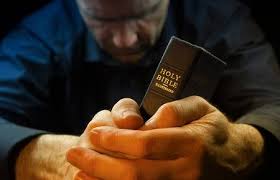
by admin | Jan 21, 2019 | Uncategorized
How often we are quick to blame God for not answering our prayers even when we have our own share of the blame. A sister said to, Pastor '' I have made several attempts and commitments and yet it looks like the situation is impossible and my reply was, God is FAITHFUL.
God will not reason with unprofitable talks remember like the book of Job said.
Job 15:3 Should he reason with unprofitable talk? or with speeches wherewith he can do no good?
I often tell people how busy God is thinking about every soul and things He has created and making sure they are all in perfect position, and to think of Him reasoning with idle talks, is a joke for the trash.
Think about HIM managing over 7 billion souls on the earth.... This is why we must be prepared and ever ready before coming to God in prayers. Imagine coming before a president of a country without adequate preparation in your request?
True, God is not a man but our receiving from Him is dependent on our spiritual preparedness to receive. god is much more willing to give than we are ready to ask.
PRAYERS GOD WILL NOT ANSWER
- THE PRAYER OF SINNERS -
John 9:31 Now we know that God heareth not sinners: but if any man be a worshipper of God, and doeth his will, him he heareth. A sinner is the one without God in his heart. God sees them as USERS when they pray. It is better to pray to God having a relationship than to seek for God's help when your relationship with Him cant sustain the provision. - LUSTFUL PRAYERS:- A prayer with a wrong motive. desiring what you know is not a NEED but a selfish WANT. James 4:3
Ye ask, and receive not, because ye ask amiss, that ye may consume it upon your lusts. - UNCOMMITTED TO KINGDOM MATTER: A man who does not care abut the heartbeat of God, God has no reason to care about his request. The greatest spiritual investment on earth and in heaven is soul winning. A man that can be involve in the exercise of soul winning will always have God to answer his needs......John 15:16
16 Ye have not chosen me, but I have chosen you, and ordained you, that ye should go and bring forth fruit, and that your fruit should remain: that whatsoever ye shall ask of the Father in my name, he may give it you. - FAITHLESS PRAYERS: Of what need is prayer when you have alternatives. God does not share is glory and he is yet to. Faith is the only permitted why to receiving from God.. James 1:6 But let him ask in faith, nothing wavering. For he that wavereth is like a wave of the sea driven with the wind and tossed. 7 For let not that man think that he shall receive any thing of the Lord

by Benedict Soghie | Jan 15, 2019 | Uncategorized
It's a sad thing that we give priority to the things we will never have forever. This is not to mean it is wrong to have natural blessings like a good car, fine education or a fancy lifestyle.
The is truth, God wants all of these for us even more but we must be careful of the deceitfulness of wordly pleasure and concentration on SELF.
Acquisition without heaven in-view is damnation without knowing.
Mark 4:19 And the cares of this world, and the deceitfulness of riches, and the lusts of other things entering in, choke the word, and it becometh unfruitful.
Before we came into this world, people were, things were and certainly we will still leave them behind.
Luke 12:2 For there is nothing covered, that shall not be revealed; neither hid, that shall not be known.12:20 But God said unto him, Thou fool, this night thy soul shall be required of thee: then whose shall those things be, which thou hast provided?12:21 So is he that layeth up treasure for himself, and is not rich toward God.12:22 And he said unto his disciples, Therefore I say unto you, Take no thought for your life, what ye shall eat; neither for the body, what ye shall put on.12:23 The life is more than meat, and the body is more than raiment.12:34 For where your treasure is, there will your heart be also.
Eternity is the only world without end, where we will live forever either with God or the Devil.
This is the only generation that I know that is highly competitive, desiring vain things that are subject to decay and destruction. The desires for pleasures, food, good living without a ONE MINUTE relationship with God even in prayer is fast fading away.
Parents no longer consider devotion as anything important. Attending to the social need of the children is given more priority than their spiritual well being. Isn't this a clear indication that we are in the last days.
These are individuals who are quick to spend on luxury, good cars, finest gadgets, good homes, expensive jewelries. They budget tirelessly for these things working so hard but hardly think about the kingdom of God and the return of Christ. They Lay up treasures here n earth for themselves but soon they forget that it doesn't last.
The zeal for acquisition and materalism is fast taking our fellowship. God wants our hearts back, He loves relationship.
Don't forget, we are pilgrims on earth. heaven is our home.
by Benedict Soghie | Jan 12, 2019 | Uncategorized
The tendencies are there, the fight against our faith is becoming more fierce while negligence and subtility is creeping inn. The devil using common sense and things to persuade us to give up our faith even when we don't know.
It's a common thing now for Christian's to lie, cheat, fornicate and do all sort just with a consolation that they will ask for mercy and be forgiven after the action.
I Timothy 4:1-4, Paul in the epistle identify this as the spirit of the last days. Hearts and conscience will no longer see evil in sin even when they know the consequences.
This is why we must keep ourselves reminded that Christianity is not just to deal with the devil and the sin factor, NO. It is to create a RELATIONSHIP between God and man (His Own).
Today, make a commitment and a decision asking the Holy Spirit to help you that you will rather obey the LAWS OF THE SPIRIT in Christ Jesus than the demands of the flesh. The return of Jesus is so close and the need self evaluation is key.

by admin | Jan 10, 2019 | Uncategorized
The Bible makes it clear that Christians should avoid close fellowship with professing Christians, i.e., people who call themselves Christians, who are unrepentant of serious sin, including the sin of teaching heresy.
BIBLICAL PASSAGES
Here are some biblical texts on this subject:
Matthew 18
In Matthew 18:15-17 Jesus teaches His followers:
“15 If your brother sins against you, go and tell him his fault, between you and him alone. If he listens to you, you have gained your brother. 16 But if he does not listen, take one or two others along with you, that every charge may be established by the evidence of two or three witnesses. 17 If he refuses to listen to them, tell it to the church. And if he refuses to listen even to the church, let him be to you as a Gentile and a tax collector.”
(Scripture readings in this article are from the English Standard Version.)
In this passage Jesus tells His followers during the time of His earthly ministry to treat an unrepentant sinner within the community of His followers like a Gentile and tax collector.
It is true that today we can’t follow this teaching without any modification. We live in a different era now, when Gentiles are included within God’s people, on an equal footing with Jews. So the command to treat someone like a Gentile no longer directly applies.
Nevertheless, there is no doubt that this passage contains a principle that is relevant for the whole Christian era. If it didn’t, there would seem to be no good reason why Matthew – or the Holy Spirit – decided to include the passage within this Gospel.
And this principle is surely that if a professing Christian obstinately refuses to repent, that person should be expelled from the church they are part of, and other Christians should avoid close fellowship with them.
Romans 16
In Romans 16:17 Paul says to the Roman Christians:
“I appeal to you, brothers, to watch out for those who cause divisions and create obstacles contrary to the doctrine that you have been taught; avoid them.”
Paul is clearly referring here to troublemakers within the visible Christian community.
And note how he tells his readers to keep away from such people.
1 Corinthians 5
In 1 Corinthians 5:1-2 Paul writes to the church in Corinth:
“1 It is actually reported that there is sexual immorality among you, and of a kind that is not tolerated even among pagans, for a man has his father’s wife. 2 And you are arrogant! Ought you not rather to mourn? Let him who has done this be removed from among you.”
Here Paul tells his readers to expel from the church a man who is unrepentant of serious sexual sin.
In verses 3-10 Paul continues to speak on the same general theme. And then in verses 11-13 he states:
“11 . . . I am writing to you not to associate with anyone who bears the name of brother if he is guilty of sexual immorality or greed, or is an idolater, reviler, drunkard, or swindler—not even to eat with such a one. 12 For what have I to do with judging outsiders? Is it not those inside the church whom you are to judge? 13God judges those outside. ‘Purge the evil person from among you.’”
In this passage Paul instructs the Corinthians not to associate with any professing Christian who is unrepentant of any of the sins he mentions.
2 Thessalonians 3
In 2 Thessalonians 3:6 Paul tells the Christians in Thessalonica:
“Now we command you, brothers, in the name of our Lord Jesus Christ, that you keep away from any brother who is walking in idleness and not in accord with the tradition that you received from us.”
And then in v. 14 he says:
“If anyone does not obey what we say in this letter, take note of that person, and have nothing to do with him, that he may be ashamed.”
In these verses Paul directs his readers to keep away from any professing Christian who is living an undisciplined life or who doesn’t obey Paul’s instructions.
2 Timothy 3
In 2 Timothy 3:1-5 Paul writes to Timothy:
“1 But understand this, that in the last days there will come times of difficulty. 2 For people will be lovers of self, lovers of money, proud, arrogant, abusive, disobedient to their parents, ungrateful, unholy, 3 heartless, unappeasable, slanderous, without self-control, brutal, not loving good, 4 treacherous, reckless, swollen with conceit, lovers of pleasure rather than lovers of God, 5 having the appearance of godliness, but denying its power. Avoid such people.”
Note Paul’s reference in v. 5 to “having the appearance of godliness.” It seems that the people Paul has in view in this passage are professing Christians. Or, at the very least, they must include professing Christians.
And Paul is clear that Timothy should avoid people who commit the sins he mentions.
Titus 3
In Titus 3:10 Paul tells Titus:
“As for a person who stirs up division, after warning him once and then twice, have nothing more to do with him,”
The wrongdoer Paul has in mind here is obviously someone within the visible Christian community.
2 John
In 2 John 1:9-11 John instructs his readers:
“9 Everyone who goes on ahead and does not abide in the teaching of Christ, does not have God. Whoever abides in the teaching has both the Father and the Son. 10If anyone comes to you and does not bring this teaching, do not receive him into your house or give him any greeting, 11 for whoever greets him takes part in his wicked works.”
In v. 10, when John says, “If anyone comes to you and does not bring this teaching,” he is referring to professing Christians who teach heresy.
And note that John tells his readers not to welcome such people into their houses or even greet them.
Revelation 2
In Revelation 2:14-15 the risen Jesus rebukes the church in Pergamon with these words:
“14 But I have a few things against you: you have some there who hold the teaching of Balaam, who taught Balak to put a stumbling block before the sons of Israel, so that they might eat food sacrificed to idols and practice sexual immorality. 15 So also you have some who hold the teaching of the Nicolaitans.”
It is clear that those in this church who held the teaching of Balaam were unrepentant of eating food sacrificed to idols and of practicing sexual immorality.
We don’t know exactly what the teaching of the Nicolaitans was. Nevertheless, in view of Jesus’ reference to “the works of the Nicolaitans” (Revelation 2:6) in his message to the church in Ephesus, this teaching must have involved sinful practice of some sort.
And note how Jesus criticizes the church in Pergamon for allowing among its number people who did such things. He is clearly implying that they should have been expelled.
Summing up
The Bible teaches us, then, to avoid associating closely with people who call themselves Christians but who are unrepentant of serious sin, including the sin of teaching heresy.
WHY SHOULD WE DO THIS?
This raises a question, however. Why should we avoid close association with such people? What are the dangers of having close fellowship with them?
There are two big dangers.
Bad influence
First, there is the likelihood that we will be badly influenced.
Paul refers to this danger in 1 Corinthians 5:6. In this verse, in the context of telling his readers to expel a sinning brother from fellowship, he asks:
“Do you not know that a little leaven leavens the whole lump?”
Later in the same letter, at 1 Corinthians 15:33, he makes essentially the same point when he states:
“Do not be deceived: ‘Bad company ruins good morals.’”
We should also remember Solomon, who started off so well as king, but whose idol-worshiping wives led him astray (especially 1 Kings 11:1-13).
Weakened effectiveness
Secondly, if we join forces for Christian work with people who are unrepentant of serious sin, it will very probably weaken the effectiveness of what we are trying to achieve. Sin and the Holy Spirit don’t mix, and in all likelihood the power of the Spirit in our ministry will be hindered.
OBJECTIONS ANSWERED
Despite all the biblical teaching on avoiding close fellowship with professing Christians who are unrepentant of serious sin, you will often hear Christians giving reasons why we shouldn’t in fact avoid this.
The church’s reputation
Firstly, it is often said that we shouldn’t distance ourselves from any professing Christians, even if they are unrepentant of grave sins, in order to avoid visible disunity that would damage the church’s reputation in the non-Christian world.
Of course, it is good to avoid visible disunity where reasonably possible. In relatively minor matters, there is a place for agreeing to disagree with other Christians and for overlooking things.
However, in important matters, as we have seen, the Bible makes it very clear that we should separate from those who are in serious sin. It is not that we are unaware of the harm to the church’s reputation that this might cause. It is just that the harm caused by closely associating with such people is so much greater.
Trying to change people
There are also believers who say that it is good to have close fellowship with professing Christians who are in serious sin so that we can try to change them.
Again, the priority here is wrong.
It is true that it is sometimes right for us to discuss things with such people to try to get them to change their views and practices.
However, we shouldn’t associate closely with them. The Bible is clear about this, and the dangers are too great.
More people
Another reason given for closely associating with professing Christians in sin is so that we will have more people to do Christian work.
Once again, the priority is wrong. The problems caused by closely associating with unrepentant professing Christians far outweigh what we gain by the increase in numbers.
We must bear in mind too that in God’s economy it is not always the case that more people means better results. Remember Gideon’s army. At 10,000 strong it was not fit for God’s purposes. However, when its number had reduced to 300, He was ready to use it (Judges 7:1-22).
It is the quality of our relationship with God that is most important, not how many of us there are.
Finance
There are also believers who approve of close fellowship with unrepentant professing Christians, when this will solve financial problems.
For example, sometimes the following sort of situation arises:
A church of devout Christians has financial difficulties. There is another, wealthier church in the neighborhood that is not true to the Bible in all important matters. This wealthier church is willing to join forces in some ways with the devout church and help with its financial problems. The devout church agrees to this arrangement.
Yet again, the priority here is all wrong. What is most important is for God’s people to remain close to Him and to move forward spiritually, even if financial difficulties arise. There are many wealthy churches in the world where spirituality is weak and little is achieved. On the other hand, there are many materially poor churches, where much is accomplished.
We would do well to consider the words of the risen Jesus to the church in Smyrna:
“I know your tribulation and your poverty (but you are rich)” (Revelation 2:9).
Here Jesus is contrasting the material poverty of this church with their spiritual riches.
It is also worth bearing in mind that once a church has decided to put spiritual matters first, God might choose to solve its financial problems.
Summing up
None of the above arguments, then, is at all convincing. Instead of making excuses for not following biblical teaching, we should do our best to put it into practice.
EXCEPTIONAL SITUATIONS
Despite all that I have said, it does make sense to think that there may occasionally be exceptional situations when it would be right to associate closely with professing Christians who are unrepentant of serious sin:
First, there may be rare occasions when those in a church who are unrepentant are the majority, and the faithful minority is not really in circumstances that allow separation. This could be the situation of the church in Sardis in Revelation 3:1-6.
Second, I think God may occasionally call Christians to work within a compromised church, to try to change things from within. This, however, would only be a task for strong, mature believers.
Third, there may be rare occasions when joining forces with those in serious sin is right because it would open an important door that would otherwise remain closed.
Even if there are rare exceptions to the rule, however, we must not allow these to obscure the rule. As a general principle we should avoid close fellowship with professing Christians who are unrepentant of serious sins, including those who teach heresy.
FINAL THOUGHTS
Christians in Western countries today often closely associate with anyone who claims to be a Christian, even when they know that that person is unrepentant of serious sin. Similarly, close fellowship is often offered to churches that teach heresy or condone sinful behavior.
However, this willingness to welcome and put our arms around every professing Christian is far from being a biblical attitude. The first century believers were taught not to do this, and the same principle applies to us today.
It is true that there may occasionally be exceptions to this principle. But unless we are sure that an exceptional situation has arisen, we should aim to follow biblical teaching in this area.
See also my articles:
There Is No Such Thing as a Christian Half-Brother or Half-Sister
Christians Shouldn’t Think of Themselves as Members of a Denomination
I have been a Christian for over 30 years. I have a Ph.D. in New Testament from the University of Edinburgh. I am a UK national and I currently live in the south of Scotland. Check out my blog, The Orthotometist, at maxaplin.blogspot.com
Article Source: http://www.faithwriters.com-CHRISTIAN WRITERS