by admin | Apr 12, 2019 | Christian Religion, Faith
There are a few different understandings when it comes to the doctrine of Original sin. This ranges from the belief that man has inherited a sinful nature at birth to the belief that everyone is from birth born already being a sinner. Everyone is already a sinner even though they have not yet personally sinned because they have inherited the sin of Adam. It is through the latter belief that the doctrine of infant baptism was born. A child would require to be baptised in order to wash that sin away as if the child were to die before baptism then the child would die in essence a sinner and would not therefore be saved. This has caused countless mothers who have had to first deal with the loss of a child to then also have to deal with the belief that that child has either no salvation or has to progress through purgatory in order to obtain salvation.
But is original sin Biblical. The FIRST and most IMPORTANT thing we need to do before starting the answer to this question is to separate Original sin and INHERENT Original sin. These 2 are NOT the same….and I will repeat this because it is very important, Original sin and INHERENT Original sin are NOT the same.
There is a fundamental difference between the doctrine of original sin and the doctrine of Inherent original sin.
Original sin is biblical, Inherent original sin is NOT.
When most people argue for or against original sin they actually include inherent original sin in the argument. The 2 are combined. This is an INCORRECT argument.
So let's look at both of these and show how people get this wrong and what the correct understanding should be.
Original sin.
The Bible very clearly states that through Adam’s sin, through one man, sin entered into the world.
Romans 5-12 Wherefore, as by one man sin entered into the world, and death by sin; and so death passed upon all men, for that all have sinned:
Romans 5-19 For as by one man's disobedience many were made sinners, so by the obedience of one shall many be made righteous.
It is very clear that there was an original sin, the first sin of man. Sin then entered into the world as before it sin was not in the world. This sin then is the first sin it is the original sin. However this is very different than saying each and every person is born with that sin already attributed to them. They are in essence born already being a sinner. Although they have yet to personally sin Adam's sin, the original sin is already credited to their “account”. This is inherent original sin. And it is this belief that is more often than not being referred to when people talk about original sin. As I also stated there is also the belief that is slightly different regarding the inherent original sin and that is that a person is not actually born with sin but born with the nature to sin. They are so inherently bad , so inherently depraved that they simply will sin and there is nothing they can do about it, it is impossible for humans not to sin, its just their inherited nature to do so.
Saying that a person has no choice but to sin no ability to not sin takes away the wickedness of the sin itself and takes the responsibility away from the person sinning. Even if a person wanted to not sin they wouldn't be able to not sin. It therefore is not the fault of the person sinning they are only doing what is in their nature to do. It is in itself wrong to be held accountable for something you have no choice over.
The doctrine of Inherent original sin is very easily disproved however before I get to this let's have a look at the verses that are used to support the belief and address them.
Supporting verses
Romans 5- 12 Wherefore, as by one man sin entered into the world, and death by sin; and so death passed upon all men, for that all have sinned:
Here we have a verse that is used to show that all have sinned. It is read into this verse that this means that all have sin and so this must mean that all have inherited sin. However the verse very clearly states all have SINNED not that all have inherited sin. A person has sinned when they have sinned. As all men sin all men have sinned. If we were born with that sin it would have to say for all men have inherited sin. There simply is nothing in this verse to state that a person is born with sin, EVEN if the doctrine was true this verse could not demonstrate it. Through Adam's sin, sin entered into the world and all have the ability to sin and all do indeed sin. But they are sinners once they have exercised that ability to sin and they themselves have sinned.
Psalm 58- 3 The wicked are estranged from the womb: they go astray as soon as they be born, speaking lies.
Notice that it states ONLY the wicked therefore very clearly not referring to all otherwise it would state all and not the wicked. Later in the same psalm there is a reference to the righteous so there are wicked and there are righteous not everyone is called wicked.
Psalm 58- 10 The righteous shall rejoice when he seeth the vengeance: he shall wash his feet in the blood of the wicked.
11So that a man shall say, Verily there is a reward for the righteous: verily he is a God that judgeth in the earth.
The verse also states that as soon as they are born they are speaking lies. Now are those who say this verse is referring to a person being wicked and sinful from the moment they are born really going to use the fact that they speak lies from the moment they were born to prove it. I've never heard a new born baby speaking anything let alone lies. Maybe there is a different understanding here. The verse very clearly states they go astray it does not say they are astray. The wicked go astray. In order to go astray you must first not be astray otherwise you are astray and can't go astray seeing that is what you already are. So even if we take this to literally mean as soon as a person is born they are wicked and go astray they must have been not astray to start with. However you look at this it cannot show a person is born astray or with sin, they must go astray and therefore have to sin.
Psalm 51-5 Behold, I was shapen in iniquity; and in sin did my mother conceive me.
This verse just doesn't say what the original sin believers claim it does. First off it does not refer to ALL humanity but the psalmist (David) is claiming this about himself. Secondly when they read this verse they substitute the word IN with the word WITH. David is not claiming that he was shapen with iniquity but in iniquity, and he wasn't conceived with sin but in it. Sin is in the world and the mother was a sinner, it is IN sin that David is claiming not that he was conceived WITH sin.
The NIV would have us believe that a person is born with sin
Psalm 51-5 Surely I was sinful at birth, sinful from the time my mother conceived me.
But as i've already shown in the KJV that is NOT what the Bible states.
The Hebrew just does not state this
×"×Ö×'×××× ×××××× ××'××× ×××××× ××××
A literal translation would be
Behold in iniquity I was shaped and in sin conceive did my mother
It isn't the psalmist who was in sin but his mother in a sinful world.
Now that we have a proper understanding of what these verses actually mean lets disprove the doctrine itself. There is ONE simple way to disprove this doctrine…..Jesus.
JESUS
Jesus was a man made in the likeness of men.
Philippians 2-7 But made himself of no reputation, and took upon him the form of a servant, and was made in the likeness of men:
Jesus was sinless, he had NO sin
2 Corinthians 5-21 For he hath made him to be sin for us, who knew no sin; that we might be made the righteousness of God in him.
If inherent original sin was indeed true then Jesus would also have inherited that sin and could not have been sinless. Just as if he inherited a sin nature where it was impossible for him not to sin, he would again not have been sinless as he would have sinned. Jesus himself would have required a removal of that sin.
Jesus was not infant baptised and he himself claimed that we should be like little children.
Matthew 18-3 And said, Verily I say unto you, Except ye be converted, and become as little children, ye shall not enter into the kingdom of heaven.
Jesus was baptised at the age of 30 and it was NOT to remove sin but to fulfill all righteousness.
Matthew 3- 13 Then cometh Jesus from Galilee to Jordan unto John, to be baptized of him. 14 But John forbad him, saying, I have need to be baptized of thee, and comest thou to me? 15And Jesus answering said unto him, Suffer it to be so now: for thus it becometh us to fulfil all righteousness. Then he suffered him.
So original sin can be found in the Bible but it is not inherited. A person becomes a sinner once they sin.
Image Credit
by admin | Apr 12, 2019 | Christian Religion, Faith
Something that modern readers of the Bible often fail to recognize is how many paradoxes and tensions there are in the Christian faith. It is frequently the case that two things which at first sight seem to contradict each other are both in fact true.
The following sort of thing happens a lot:
The Bible teaches two truths, which we can call A and B. Some people correctly understand that the Bible teaches A. However, they think that A and B contradict each other. So they deny that the Bible teaches B, and they explain away passages which teach B. Other people correctly understand that the Bible teaches B. But they too think that A and B contradict each other. So they deny A and explain away the passages that teach A. Both sets of people therefore end up denying some biblical truth.
The amount of bad teaching in the church would be much less if there was better understanding of how much paradox and tension the Bible contains.
Here are some examples of how people go wrong by failing to take account of paradoxes in the Christian faith:
Jesus as one person who is fully God and fully human
The Bible teaches that Jesus Christ is fully God (e.g., John 20:28) and also fully human (e.g., 1 Timothy 2:5), yet one person (e.g., John 1:14).
At first glance it might seem impossible that Jesus could be all these things, and since the early centuries of the church many have rejected this theology.
Some, like Jehovah’s Witnesses today, have said that Jesus was not God at all, but that He was entirely created by God. At the other extreme, some have said that He was God, but only appeared to be a man, or that He was God in a human body but had no human soul. And another group has claimed that He was fully God and fully human but that He was really two distinct persons.
In fact, however, this theology is not contradictory, even though it is difficult to understand.
God’s sovereignty and human free will
According to Scripture, God is sovereignly in control of all events, and in a real sense everything that happens comes from His hand (e.g., Amos 3:6). However, the Bible also teaches that people have free will, and that we and not God are responsible for sin (e.g., 1 Corinthians 10:13).
At first sight, these themes seem as if they might contradict each other, and there are huge numbers of Christians who minimize one or the other of them.
Those who accept Arminian theology, for example, fail to do proper justice to the sovereignty of God. By contrast, Calvinists fail to properly appreciate the reality of free will or the goodness of God.
Exactly how we reconcile God’s sovereignty with human free will is something that has been debated for many centuries. Personally, I have a lot of sympathy with Molinist theology, which is becoming increasingly popular in evangelical circles.
Nevertheless, regardless of how we attempt to reconcile these things, Scripture teaches them both, and we should take care not to explain either of them away.
Salvation by faith but accompanied by good deeds
The Bible makes it clear that salvation is by faith and not by doing good deeds (e.g., Ephesians 2:8-9). But Scripture is just as clear that people whose lives are not characterized by doing good deeds are not saved (e.g., James 2:26).
There might at first seem to be a contradiction between these points, and there are many today who say that there is. At one extreme, Roman Catholics claim that Christians need to partly earn their salvation. And at the other extreme those who hold so-called Free Grace Theology claim that everyone who makes a decision to accept Jesus as Savior is saved, even if they are living an unrepentantly sinful life.
In fact, there is no contradiction between these points. We are saved by faith and not by good deeds, but where there is genuine faith, good deeds will always, so to speak, tag along.
Forgiveness by faith and in water baptism
Many passages in the Bible refer to people being saved by faith in Christ (e.g., Romans 3:28). Yet there are also numerous passages that most naturally seem to imply that God’s standard way of doing things is to forgive the sins of new believers at the time they are baptized (e.g., Acts 2:38).
Many Christians today deny that God forgives sins in water baptism, because they think that would conflict with forgiveness by faith.
This, however, is to compare apples with oranges. Baptism can be seen as an act, which should take place as soon as someone comes to faith, and in which God normatively forgives the sins of people who are claiming forgiveness by faith. We could perhaps compare this to gaining a college degree: Faith is what gives someone the entitlement to the degree, while baptism is the graduation ceremony.
I do believe that God often acts outside His standard pattern by forgiving new Christians before baptism. Nevertheless, Scripture seems to teach that His standard pattern is to forgive in the act of baptism.
A God of love who sends people to hell
According to the Bible, one key attribute of God is that He is loving (e.g., Lamentations 3:22). However, it also teaches clearly that He sends many people to hell (e.g., Matthew 25:46).
There are some who find these things contradictory and claim that a loving God would never send anyone to hell.
In reality, however, these things don’t contradict each other. Although God is a God of love, He is also a God of justice, and justice involves inflicting punishment.
The crucifixion for us and for God
The Bible teaches often that God’s purpose in the crucifixion of Christ was to benefit people (e.g., Romans 5:8). However, it tells us too that God’s purpose in the cross was to glorify Himself (e.g., Ephesians 1:5-6).
These purposes might at first sight seem to conflict with each other, and many Christians tend to minimize one or the other of them. Some downplay passages which teach that God’s purpose in salvation was self-glorification. Others downplay passages which teach that His purpose was to benefit people, and claim that Christ’s dying for sinners was really only a means to an end, which was to give God glory.
In fact, neither aspect of God’s purpose should be downplayed. How God could have had these two different purposes in the cross is not easy to understand, but the Bible teaches them both, and we should embrace each of them.
Joy and suffering
Scripture tells us that the normal Christian life should involve significant joy (e.g., John 15:11). Yet many passages make it clear that normal Christian living also involves significant hardship and suffering (e.g., Revelation 1:9).
There are, however, large numbers of Christians today who downplay the role of suffering in the Christian life. They know that Scripture teaches that it is God’s will to give His children joy, and they simplistically assume that this must mean that we shouldn’t expect to suffer.
In actual fact, although joy and suffering are in tension with each other, they are not contradictory.
Gifts of the Spirit and reasoning
The Bible instructs Christians to desire gifts of the Holy Spirit (e.g., 1 Corinthians 14:1). However, many biblical passages also make it clear that there is a big place for reasoning with the mind in the Christian faith (e.g., Acts 19:8-9).
There are more than a few Christians today who tend to think that experiences of gifts of the Spirit make reasoning unimportant. They therefore underemphasize the role of the mind in the Christian life.
In fact, gifts of the Spirit and reasoning with the mind don’t contradict each other at all. Rather, they complement each other beautifully.
Motivated by love and to gain good things for ourselves
The Bible encourages us to be motivated to live a holy life by love for God and love for others, and not by selfishness (e.g., 2 Corinthians 5:15). Yet it also encourages us to be motivated to live a holy life by the prospect of receiving eternal blessings in heaven (e.g., James 1:12).
At first sight, these things might seem to contradict each other, and many Christians tend to minimize one or the other of them.
However, there is no contradiction here. There is a sense in which it is right to be motivated by loving God and others, and also a sense in which it is right to be motivated by wanting to do ourselves good.
Already and not yet
Sometimes we find biblical passages teaching that a certain thing has already happened, and other passages teaching that the same thing will take place in the future.
For example, Scripture tells us that those who are Christians have been saved from their sins (e.g., Romans 8:24), and that they will be saved in the future (e.g., Romans 5:9).
At first glance these things look as if they conflict with each other, and many Christians make the mistake of downplaying the already or the future aspect.
This tension is not actually very difficult to understand. Following the crucifixion–resurrection–giving of the Spirit complex of events, some things have come into existence in a partial way, but the fullness of these things will be realized in the future after the Lord returns to earth.
Two kinds of Israel
According to Scripture, the church is spiritual Israel (e.g., Philippians 3:2-3). But the Bible also seems to teach that God has future plans for ethnic Israel (e.g., Romans 11:25-29).
Huge numbers of Christians today see these things as contradictory. Many, especially those who accept dispensationalist theology, deny that the church is spiritual Israel. And many others, especially those who accept replacement theology, deny that God has unfinished business with ethnic Israel.
There is, however, no need to see a contradiction here. It seems that there are two kinds of Israel in existence today, even if it is not easy to understand the relationship between the two.
Final words
The list of examples I have given could be continued, but I believe I have said enough to make my point. It should be clear that there are many paradoxes and tensions in the Christian faith. Often things that at first sight might seem to be a case of either–or are actually a case of both–and.
I would suggest that a failure to understand this is one of the main causes of false teaching in the church today. Frequently, a Christian rightly sees that the Bible teaches a truth, and they want to support and defend that truth. But then they go wrong by supposing that that truth must mean that something else is false, although this other thing is also taught by Scripture.
I think one reason why people fail to recognize paradoxes in the Christian faith is because they are unwilling to believe something they don’t understand. They can’t understand how two biblical principles fit together, so they decide that they contradict each other.
What these people are doing – even if subconsciously – is setting up their own understanding as an idol. This is not only morally wrong, however, but it also makes no sense. Given our finite and sinful condition, it is inevitable that we will all often struggle to understand things.
If the Bible teaches two principles, we should accept them both, regardless of whether we can understand how they fit together.
by admin | Apr 12, 2019 | Christian Religion, Faith
I have been digging into the famous Romans 8:28 scripture (“And we know that God causes all things to work together for good to those who love God, to those who are called according to His purpose.” NASB) trying to get a handle on the way that works concerning my life right now, and as I was reading it in context, something I have always considered false doctrine came to mind. I had to follow it up, no doubt about it.
The teaching of Calvinism that says all people are predestined – some to be saved and others not; no choice, is the way Calvinism is taught around where I live. I consider it false doctrine because it causes me to wonder how both that explanation and John 3:16 could be true. “For God so loved the world, that He gave His only begotten Son, that whoever believes in Him shall not perish, but have eternal life” says, “whoever,” and whoever means… whoever – “any person who,” according to the dictionary. And how does the fact that God created man with a free will to be able to choose to love Him, rather than as robots that are programmed to be loyal to the Master, fit in with not having a choice? It also debunks Matthew 22:14.
There is a problem here – the Bible must agree with itself – and this is an example of the opposite happening by means of man’s interpretation. “I testify to everyone who hears the words of the prophecy of this book: if anyone adds to them, God will add to him the plagues which are written in this book;” Revelation 22:18 (NASB) See also Deuteronomy 4:2, Proverbs 30:5-6; Deuteronomy 12:32; Matthew 22:29; Mark 7:13; Matthew 24:24.
When using Romans 8:29-30 as support for this false doctrine, the correct meaning of “predestined” is not considered as it is used in this long sentence. “For those whom He foreknew, He also predestined to become conformed to the image of His Son, so that He would be the firstborn among many brethren; and these whom He predestined, He also called; and these whom He called, He also justified; and these whom He justified, He also glorified. Romans 8:29-30 (NASB)
Nor is the accurate translation from the original Aramaic considered, which explains this misunderstood or misused word. “And he knew them previously; and he sealed them with the likeness of the image of his Son; that He might be the first-born of many brothers. And those whom he previously sealed, them he called: and those whom he called, them he made righteous: and those whom he made righteous, them he glorified.” There is also a helpful footnote in the Aramaic English New Testament regarding being called, used this way which is the same way it is used in Matthew 22:14 “For many are those that are called, and few are chosen.”
Note from AENT: “Also “have chosen.” A person who is “called” must choose to follow. To put the onus of being “chosen” solely upon Mashiyach [Messiah] is false religion. True faith demands voluntary discipleship and sanctification according to the Word of YHWH [God]. Therefore, each soul also has the choice and responsibility of choosing to be chosen. Jews are YHWH’s “chosen people” – however, He has most certainly “un-chosen” Jews who wage war against Torah, YHWH and His Mashiyach.”
It becomes confusing to try to rectify Matthew 22:14 (“For many are those that are called, and few are chosen.”) and “predestined” as Calvinism teaches it, but I believe I understand it now. The predestined are those such as Martin Luther, the Wesley brothers - John and Charles, Alexander Peden, and many others who have dedicated their lives to Messiah and helping His followers understand His teachings. For example, look at the Reformation of the 16th century and even the Medieval times leading up to it. Before Martin Luther appeared on the scene, St. Francis of Assisi, the Waldensians, John Hus, and John Wycliffe, to name just a few, were doing their parts. God gave each of them a certain part to play, He predestined them, giving them certain things to accomplish for His truth, no one person did it all.
But it is not all people who are predestined to do these notable things and that leaves plenty of room for the rest of us “whoevers” to choose Messiah also!
by admin | Jan 21, 2019 | Uncategorized
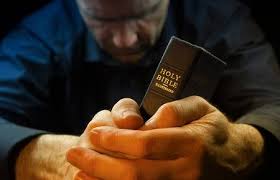
How often we are quick to blame God for not answering our prayers even when we have our own share of the blame. A sister said to, Pastor '' I have made several attempts and commitments and yet it looks like the situation is impossible and my reply was, God is FAITHFUL.
God will not reason with unprofitable talks remember like the book of Job said.
Job 15:3 Should he reason with unprofitable talk? or with speeches wherewith he can do no good?
I often tell people how busy God is thinking about every soul and things He has created and making sure they are all in perfect position, and to think of Him reasoning with idle talks, is a joke for the trash.
Think about HIM managing over 7 billion souls on the earth.... This is why we must be prepared and ever ready before coming to God in prayers. Imagine coming before a president of a country without adequate preparation in your request?
True, God is not a man but our receiving from Him is dependent on our spiritual preparedness to receive. god is much more willing to give than we are ready to ask.
PRAYERS GOD WILL NOT ANSWER
- THE PRAYER OF SINNERS -
John 9:31 Now we know that God heareth not sinners: but if any man be a worshipper of God, and doeth his will, him he heareth. A sinner is the one without God in his heart. God sees them as USERS when they pray. It is better to pray to God having a relationship than to seek for God's help when your relationship with Him cant sustain the provision. - LUSTFUL PRAYERS:- A prayer with a wrong motive. desiring what you know is not a NEED but a selfish WANT. James 4:3
Ye ask, and receive not, because ye ask amiss, that ye may consume it upon your lusts. - UNCOMMITTED TO KINGDOM MATTER: A man who does not care abut the heartbeat of God, God has no reason to care about his request. The greatest spiritual investment on earth and in heaven is soul winning. A man that can be involve in the exercise of soul winning will always have God to answer his needs......John 15:16
16 Ye have not chosen me, but I have chosen you, and ordained you, that ye should go and bring forth fruit, and that your fruit should remain: that whatsoever ye shall ask of the Father in my name, he may give it you. - FAITHLESS PRAYERS: Of what need is prayer when you have alternatives. God does not share is glory and he is yet to. Faith is the only permitted why to receiving from God.. James 1:6 But let him ask in faith, nothing wavering. For he that wavereth is like a wave of the sea driven with the wind and tossed. 7 For let not that man think that he shall receive any thing of the Lord
by admin | Jan 10, 2019 | Uncategorized
The Bible makes it clear that Christians should avoid close fellowship with professing Christians, i.e., people who call themselves Christians, who are unrepentant of serious sin, including the sin of teaching heresy.
BIBLICAL PASSAGES
Here are some biblical texts on this subject:
Matthew 18
In Matthew 18:15-17 Jesus teaches His followers:
“15 If your brother sins against you, go and tell him his fault, between you and him alone. If he listens to you, you have gained your brother. 16 But if he does not listen, take one or two others along with you, that every charge may be established by the evidence of two or three witnesses. 17 If he refuses to listen to them, tell it to the church. And if he refuses to listen even to the church, let him be to you as a Gentile and a tax collector.”
(Scripture readings in this article are from the English Standard Version.)
In this passage Jesus tells His followers during the time of His earthly ministry to treat an unrepentant sinner within the community of His followers like a Gentile and tax collector.
It is true that today we can’t follow this teaching without any modification. We live in a different era now, when Gentiles are included within God’s people, on an equal footing with Jews. So the command to treat someone like a Gentile no longer directly applies.
Nevertheless, there is no doubt that this passage contains a principle that is relevant for the whole Christian era. If it didn’t, there would seem to be no good reason why Matthew – or the Holy Spirit – decided to include the passage within this Gospel.
And this principle is surely that if a professing Christian obstinately refuses to repent, that person should be expelled from the church they are part of, and other Christians should avoid close fellowship with them.
Romans 16
In Romans 16:17 Paul says to the Roman Christians:
“I appeal to you, brothers, to watch out for those who cause divisions and create obstacles contrary to the doctrine that you have been taught; avoid them.”
Paul is clearly referring here to troublemakers within the visible Christian community.
And note how he tells his readers to keep away from such people.
1 Corinthians 5
In 1 Corinthians 5:1-2 Paul writes to the church in Corinth:
“1 It is actually reported that there is sexual immorality among you, and of a kind that is not tolerated even among pagans, for a man has his father’s wife. 2 And you are arrogant! Ought you not rather to mourn? Let him who has done this be removed from among you.”
Here Paul tells his readers to expel from the church a man who is unrepentant of serious sexual sin.
In verses 3-10 Paul continues to speak on the same general theme. And then in verses 11-13 he states:
“11 . . . I am writing to you not to associate with anyone who bears the name of brother if he is guilty of sexual immorality or greed, or is an idolater, reviler, drunkard, or swindler—not even to eat with such a one. 12 For what have I to do with judging outsiders? Is it not those inside the church whom you are to judge? 13God judges those outside. ‘Purge the evil person from among you.’”
In this passage Paul instructs the Corinthians not to associate with any professing Christian who is unrepentant of any of the sins he mentions.
2 Thessalonians 3
In 2 Thessalonians 3:6 Paul tells the Christians in Thessalonica:
“Now we command you, brothers, in the name of our Lord Jesus Christ, that you keep away from any brother who is walking in idleness and not in accord with the tradition that you received from us.”
And then in v. 14 he says:
“If anyone does not obey what we say in this letter, take note of that person, and have nothing to do with him, that he may be ashamed.”
In these verses Paul directs his readers to keep away from any professing Christian who is living an undisciplined life or who doesn’t obey Paul’s instructions.
2 Timothy 3
In 2 Timothy 3:1-5 Paul writes to Timothy:
“1 But understand this, that in the last days there will come times of difficulty. 2 For people will be lovers of self, lovers of money, proud, arrogant, abusive, disobedient to their parents, ungrateful, unholy, 3 heartless, unappeasable, slanderous, without self-control, brutal, not loving good, 4 treacherous, reckless, swollen with conceit, lovers of pleasure rather than lovers of God, 5 having the appearance of godliness, but denying its power. Avoid such people.”
Note Paul’s reference in v. 5 to “having the appearance of godliness.” It seems that the people Paul has in view in this passage are professing Christians. Or, at the very least, they must include professing Christians.
And Paul is clear that Timothy should avoid people who commit the sins he mentions.
Titus 3
In Titus 3:10 Paul tells Titus:
“As for a person who stirs up division, after warning him once and then twice, have nothing more to do with him,”
The wrongdoer Paul has in mind here is obviously someone within the visible Christian community.
2 John
In 2 John 1:9-11 John instructs his readers:
“9 Everyone who goes on ahead and does not abide in the teaching of Christ, does not have God. Whoever abides in the teaching has both the Father and the Son. 10If anyone comes to you and does not bring this teaching, do not receive him into your house or give him any greeting, 11 for whoever greets him takes part in his wicked works.”
In v. 10, when John says, “If anyone comes to you and does not bring this teaching,” he is referring to professing Christians who teach heresy.
And note that John tells his readers not to welcome such people into their houses or even greet them.
Revelation 2
In Revelation 2:14-15 the risen Jesus rebukes the church in Pergamon with these words:
“14 But I have a few things against you: you have some there who hold the teaching of Balaam, who taught Balak to put a stumbling block before the sons of Israel, so that they might eat food sacrificed to idols and practice sexual immorality. 15 So also you have some who hold the teaching of the Nicolaitans.”
It is clear that those in this church who held the teaching of Balaam were unrepentant of eating food sacrificed to idols and of practicing sexual immorality.
We don’t know exactly what the teaching of the Nicolaitans was. Nevertheless, in view of Jesus’ reference to “the works of the Nicolaitans” (Revelation 2:6) in his message to the church in Ephesus, this teaching must have involved sinful practice of some sort.
And note how Jesus criticizes the church in Pergamon for allowing among its number people who did such things. He is clearly implying that they should have been expelled.
Summing up
The Bible teaches us, then, to avoid associating closely with people who call themselves Christians but who are unrepentant of serious sin, including the sin of teaching heresy.
WHY SHOULD WE DO THIS?
This raises a question, however. Why should we avoid close association with such people? What are the dangers of having close fellowship with them?
There are two big dangers.
Bad influence
First, there is the likelihood that we will be badly influenced.
Paul refers to this danger in 1 Corinthians 5:6. In this verse, in the context of telling his readers to expel a sinning brother from fellowship, he asks:
“Do you not know that a little leaven leavens the whole lump?”
Later in the same letter, at 1 Corinthians 15:33, he makes essentially the same point when he states:
“Do not be deceived: ‘Bad company ruins good morals.’”
We should also remember Solomon, who started off so well as king, but whose idol-worshiping wives led him astray (especially 1 Kings 11:1-13).
Weakened effectiveness
Secondly, if we join forces for Christian work with people who are unrepentant of serious sin, it will very probably weaken the effectiveness of what we are trying to achieve. Sin and the Holy Spirit don’t mix, and in all likelihood the power of the Spirit in our ministry will be hindered.
OBJECTIONS ANSWERED
Despite all the biblical teaching on avoiding close fellowship with professing Christians who are unrepentant of serious sin, you will often hear Christians giving reasons why we shouldn’t in fact avoid this.
The church’s reputation
Firstly, it is often said that we shouldn’t distance ourselves from any professing Christians, even if they are unrepentant of grave sins, in order to avoid visible disunity that would damage the church’s reputation in the non-Christian world.
Of course, it is good to avoid visible disunity where reasonably possible. In relatively minor matters, there is a place for agreeing to disagree with other Christians and for overlooking things.
However, in important matters, as we have seen, the Bible makes it very clear that we should separate from those who are in serious sin. It is not that we are unaware of the harm to the church’s reputation that this might cause. It is just that the harm caused by closely associating with such people is so much greater.
Trying to change people
There are also believers who say that it is good to have close fellowship with professing Christians who are in serious sin so that we can try to change them.
Again, the priority here is wrong.
It is true that it is sometimes right for us to discuss things with such people to try to get them to change their views and practices.
However, we shouldn’t associate closely with them. The Bible is clear about this, and the dangers are too great.
More people
Another reason given for closely associating with professing Christians in sin is so that we will have more people to do Christian work.
Once again, the priority is wrong. The problems caused by closely associating with unrepentant professing Christians far outweigh what we gain by the increase in numbers.
We must bear in mind too that in God’s economy it is not always the case that more people means better results. Remember Gideon’s army. At 10,000 strong it was not fit for God’s purposes. However, when its number had reduced to 300, He was ready to use it (Judges 7:1-22).
It is the quality of our relationship with God that is most important, not how many of us there are.
Finance
There are also believers who approve of close fellowship with unrepentant professing Christians, when this will solve financial problems.
For example, sometimes the following sort of situation arises:
A church of devout Christians has financial difficulties. There is another, wealthier church in the neighborhood that is not true to the Bible in all important matters. This wealthier church is willing to join forces in some ways with the devout church and help with its financial problems. The devout church agrees to this arrangement.
Yet again, the priority here is all wrong. What is most important is for God’s people to remain close to Him and to move forward spiritually, even if financial difficulties arise. There are many wealthy churches in the world where spirituality is weak and little is achieved. On the other hand, there are many materially poor churches, where much is accomplished.
We would do well to consider the words of the risen Jesus to the church in Smyrna:
“I know your tribulation and your poverty (but you are rich)” (Revelation 2:9).
Here Jesus is contrasting the material poverty of this church with their spiritual riches.
It is also worth bearing in mind that once a church has decided to put spiritual matters first, God might choose to solve its financial problems.
Summing up
None of the above arguments, then, is at all convincing. Instead of making excuses for not following biblical teaching, we should do our best to put it into practice.
EXCEPTIONAL SITUATIONS
Despite all that I have said, it does make sense to think that there may occasionally be exceptional situations when it would be right to associate closely with professing Christians who are unrepentant of serious sin:
First, there may be rare occasions when those in a church who are unrepentant are the majority, and the faithful minority is not really in circumstances that allow separation. This could be the situation of the church in Sardis in Revelation 3:1-6.
Second, I think God may occasionally call Christians to work within a compromised church, to try to change things from within. This, however, would only be a task for strong, mature believers.
Third, there may be rare occasions when joining forces with those in serious sin is right because it would open an important door that would otherwise remain closed.
Even if there are rare exceptions to the rule, however, we must not allow these to obscure the rule. As a general principle we should avoid close fellowship with professing Christians who are unrepentant of serious sins, including those who teach heresy.
FINAL THOUGHTS
Christians in Western countries today often closely associate with anyone who claims to be a Christian, even when they know that that person is unrepentant of serious sin. Similarly, close fellowship is often offered to churches that teach heresy or condone sinful behavior.
However, this willingness to welcome and put our arms around every professing Christian is far from being a biblical attitude. The first century believers were taught not to do this, and the same principle applies to us today.
It is true that there may occasionally be exceptions to this principle. But unless we are sure that an exceptional situation has arisen, we should aim to follow biblical teaching in this area.
See also my articles:
There Is No Such Thing as a Christian Half-Brother or Half-Sister
Christians Shouldn’t Think of Themselves as Members of a Denomination
I have been a Christian for over 30 years. I have a Ph.D. in New Testament from the University of Edinburgh. I am a UK national and I currently live in the south of Scotland. Check out my blog, The Orthotometist, at maxaplin.blogspot.com
Article Source: http://www.faithwriters.com-CHRISTIAN WRITERS